Best AI Carrier Calling Software for Brokers and 3PLs (2026)
Updated 2026-08-23 · By Nick Grossi · 6 min read
Four platforms put AI on the phone with carriers in 2026. The real difference between them is not voice quality. It is who the agent calls, what it is allowed to agree to, and who approves the booking.
Covering loads means calls, and calls eat dispatcher hours. AI voice agents now make those calls credibly: they pitch loads, collect rates, answer check calls, and negotiate. The technology works. The buying question has moved to control: whose carriers get called, what the agent can commit to, and where the human sits.
We build one of these products, and the list below states plainly where each of the four stands.
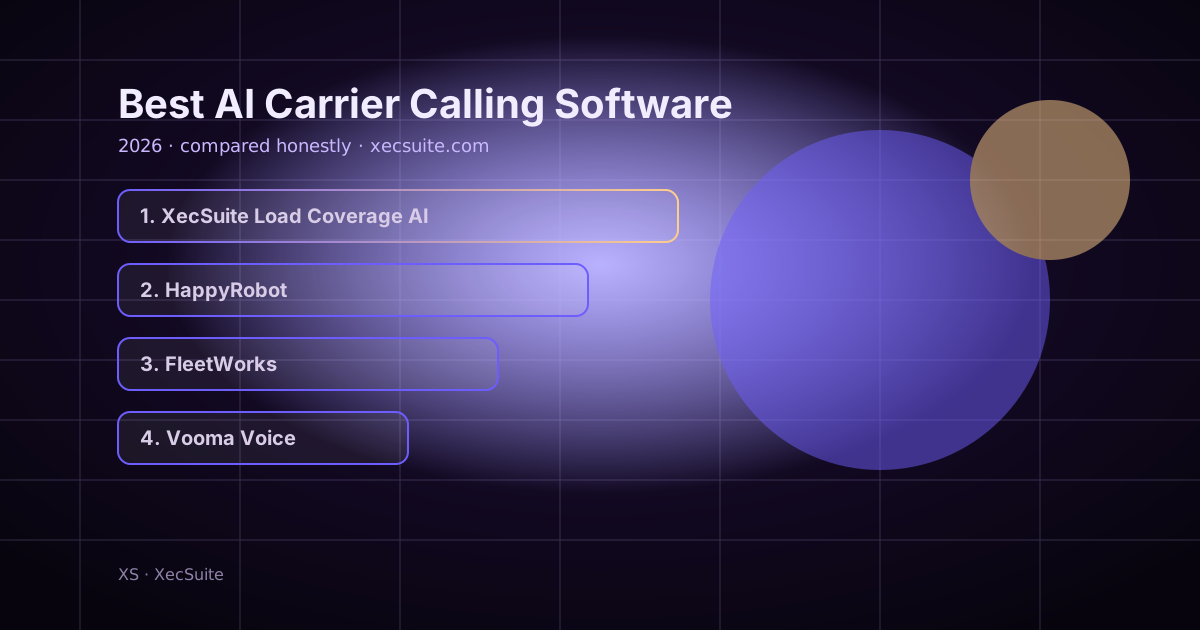
1. XecSuite Load Coverage AI
Best for: brokers and 3PLs that want coverage calls without giving up booking control
XecSuite’s voice agent calls only carriers you have already vetted, in small targeted waves, and returns live quotes with a full transcript of every call. Nothing books without a dispatcher’s approval; that gate is structural, not a setting. Quiet hours, per-carrier frequency caps, and do-not-call lists ship with it.
It fits operations that run on trusted carrier relationships and want the dialing automated but the judgment kept. Teams that want fully autonomous negotiation at maximum volume will find more aggressive options below.
Vetted carriers only, in waves you size
Every call returns a quote and a transcript
A human approves every booking
2. HappyRobot
Best for: large brokerages automating call volume across many workflows
HappyRobot is the category’s biggest player, with reported funding of about $150 million in 2026. Its agents handle inbound and outbound logistics calls across check calls, load updates, payment status, appointment scheduling, and sales negotiations.
It is enterprise-oriented breadth: many call types, high volume. Teams wanting a narrower, governance-first coverage workflow will weigh the fit.
3. FleetWorks
Best for: brokers that want AI reps working loads end to end
FleetWorks fields named AI agents that vet carriers, negotiate, and manage load coverage across calls and email. The company reports over ten thousand carriers onboarded and a Series A led by First Round Capital.
It leans further into autonomous negotiation than most. If that is what you want, it is a serious contender; if you want a person approving each cover, ask hard questions about the control model.
4. Vooma Voice
Best for: brokers already on Vooma’s email and text agents
Vooma Voice adds calling to Vooma’s multi-channel agent platform: inbound load bookings, appointment scheduling, and carrier check calls in the same system as email and text.
For existing Vooma customers it is the natural extension. As a stand-alone coverage tool it is younger than the two above.
How to choose
The voice is the demo. The controls are the product.
Ask who the agent calls. Your vetted list and an open carrier marketplace are different risk decisions.
Ask what the agent can agree to on the call, and get the answer in writing.
Listen to real transcripts before you buy. Every serious vendor has them.
Check the courtesy controls: quiet hours, frequency caps, do-not-call. Your carrier relationships outlive any tool.
Apply this to your 3PL
Want the operator version for your freight business?
Share your tool stack and the lane, decision, or workflow you are trying to fix. XecSuite will map the modules, agents, and workflow path that can produce measurable ROI.